Thinking about Blumberg Estates and wondering whether you should buy a lot or purchase a completed home? It is a smart question, especially in a subdivision where both options are currently on the table. If you want to understand the real cost, timing, and tradeoffs in 47803, this guide will help you compare both paths with more confidence. Let’s dive in.
Blumberg Estates at a glance
Blumberg Estates is an east to southeast Terre Haute subdivision where you can find both buildable lots and finished homes. As of March 2026, Realtor.com’s local market page for Blumberg Estates showed four active listings, which is a small inventory snapshot but still enough to highlight the choice buyers face here.
That same market snapshot included a 2025 new-construction home listed at $380,000 and a buildable lot listed at $52,000. Recent lot marketing also mentioned features like rolling hills, wooded areas, waterfront lots, city utilities, and covenants, which can matter if you are comparing homesite options rather than just price.
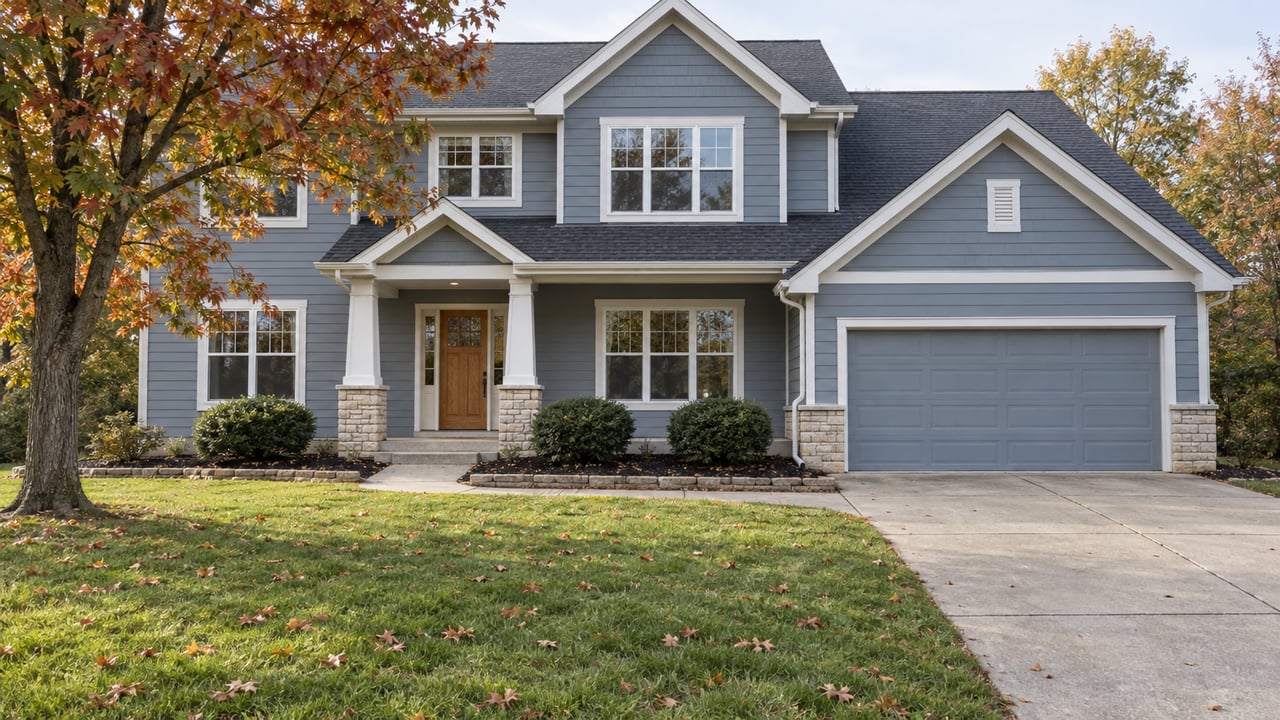
A recent closed sale also gives some context. This 3-bedroom, 3-bath brick home on Eisenhower Lane sold for $409,000 in August 2024, showing how a completed property in the subdivision can sit in a very different value range than raw land.
Buying a finished home
If you want a simpler path, buying an existing home usually gives you the clearest picture of what you are getting. You can walk the layout, evaluate condition, compare finishes, and look at sale history instead of estimating what a future build might become.
In Blumberg Estates, that means you can compare real features that affect value, like yard size, garage count, finish level, and overall upkeep. A closed sale like the Eisenhower Lane property gives you a useful benchmark because it reflects an actual finished-home result in the subdivision.
Another advantage is financing simplicity. A resale purchase usually avoids the added layers that come with new construction, especially when it comes to contractor coordination, permits, and inspections.
According to the City of Terre Haute permit information page, construction activity inside city limits will most likely need a permit, permits are purchased by the licensed contractor rather than the owner, and the city’s system tracks permits, inspections, and plan review. If you buy an existing home, much of that process is already behind you.
Why resale can feel more predictable
A finished home lets you base your decision on today’s reality instead of tomorrow’s assumptions. You can inspect the property, review the neighborhood setting, and make a decision using actual numbers rather than projected construction costs.
That predictability matters if you are budgeting carefully or trying to move on a specific timeline. For many buyers, especially value-focused buyers, that alone can make an existing home the easier choice.
Buying a lot and building
Buying land in Blumberg Estates can look very appealing at first glance. Recent lot listings showed parcels around 0.73 to 0.91 acres with asking prices in the low $50,000s, and some listings showed annual tax amounts in roughly the mid-$30s to about $40, based on recent lot details on Realtor.com.
That lower entry price is real, but it is only the starting point. The lot is not the whole budget. Once you add design choices, construction costs, financing structure, permitting, inspections, and utility planning, the total picture becomes much more involved.
What building can offer
The biggest upside to building is customization. You may be able to choose your floor plan, layout, finish level, and how your home sits on the lot, depending on the parcel and any subdivision covenants.
That can be attractive if you want a newer home, specific features, or a lot position that is hard to find in resale inventory. In a subdivision with wooded or rolling lots, homesite selection can also shape privacy, drainage, and overall use of the property.
What building adds to the process
Building takes more time before construction even begins. The City of Terre Haute license and permit information says contractor registration or license requirements apply inside city limits, permit processing generally takes 3 to 5 business days, inspections must be scheduled at least 24 hours in advance, and plan review for covered projects generally takes 7 to 10 days.
That does not mean building is a bad option. It simply means you should plan for a more procedural path, with more moving parts and more coordination than a standard home purchase.
The lot price is not the full cost
This is one of the biggest misunderstandings buyers have when they start comparing land to a finished home. A $52,000 lot is not the same thing as a move-in-ready property, and the price gap between the two should not be treated as your build budget.
Construction financing is often a major difference. The Consumer Financial Protection Bureau explains construction loans as short-term loans that cover the cost of building or rehabilitating a home, and Fannie Mae notes that construction-to-permanent financing can be structured as either a single-closing or two-closing transaction.
For you as a buyer, the practical takeaway is simple: building usually involves more coordination than a traditional resale mortgage. That can affect your timeline, documentation, and cash planning.
How resale value may differ
If you are thinking long term, resale matters whether you plan to stay for years or not. In a small-inventory subdivision like Blumberg Estates, value is likely to depend more on the finished home itself than on the dirt price alone.
The current spread between a low-$50,000 lot, a $380,000 new-construction listing, and a $409,000 sold home suggests that future value may be driven by factors like lot position, build quality, finish level, and how your completed home compares with other finished properties in the subdivision. That is an important point for buyers and small investors who want to think beyond the initial purchase.
What to verify before buying a lot
If you are leaning toward building, due diligence matters. The City of Terre Haute GIS information portal can help show zoning, sewer location, and roadway location by parcel number, which gives you a useful place to start.
You should also verify:
- Zoning for the parcel
- Sewer location and roadway location
- Any subdivision covenants
- Drainage conditions on the lot
- Utility availability and expected service setup
- School assignment by address
School information deserves a quick note here. Recent listings referenced Sugar Grove Elementary, Woodrow Wilson Middle School, and Terre Haute South Vigo High, but the district says boundary maps are only a general guide and may change, so assignment should be confirmed by address.
Why infrastructure and drainage matter
Lot-specific research is especially important on the east side. In 2025, Terre Haute said a federally funded water and sewer study could help unlock more than 800 acres for future development on the east side, and a separate city project cited drainage and storm-sewer problems in an east-side corridor.
That broader context does not mean any one lot has an issue. It does mean you should take drainage, utility access, and infrastructure questions seriously before committing to a parcel.
Which option fits you best?
There is no one-size-fits-all answer in Blumberg Estates. The better choice depends on your timeline, risk tolerance, financing comfort, and how important customization is to you.
Here is a simple way to think about it:
A finished home may fit better if you:
- Want a clearer purchase price and value comparison
- Prefer a standard mortgage process
- Need a more predictable move-in timeline
- Want to inspect the home before you commit
A lot and custom build may fit better if you:
- Want to choose your own layout and finishes
- Are comfortable with a longer process
- Understand that permits, plan review, and contractor coordination take time
- Want a homesite with features that may not exist in current resale inventory
Making a smart move in Blumberg Estates
In Blumberg Estates, buying can be simpler, but building can be more tailored. The key is not just comparing the lot price to the home price. It is understanding the full path from contract to closing, and for new construction, from dirt to completed home.
If you want help comparing a lot purchase to an existing home in 47803, local guidance can save you time and help you avoid expensive assumptions. When you are ready to talk through your options, connect with Andrew Southard Realty, LLC for practical, local insight on Terre Haute neighborhoods, pricing, and next steps.
FAQs
Should I build or buy in Blumberg Estates if I want the simplest process?
- Buying an existing home is usually simpler because you can evaluate the actual property, use standard resale comparisons, and avoid the extra layers of permits, contractor coordination, and construction financing.
What does a lot in Blumberg Estates cost right now?
- Recent lot listings in Blumberg Estates showed asking prices in the low $50,000s, with examples around 0.73 to 0.91 acres.
Why does building in Terre Haute take longer than buying an existing home?
- Building typically takes longer because contractor registration, permit processing, plan review, and inspections all happen before and during construction, adding steps beyond a standard home purchase.
What should I verify before buying land in Blumberg Estates?
- You should verify zoning, sewer and roadway location, covenants, drainage, utility details, and school assignment by address before moving forward on a lot purchase.
Are city utilities available in Blumberg Estates lots?
- Recent lot marketing in Blumberg Estates stated that city utilities are available, but you should still confirm service details for the specific parcel you are considering.
How do completed home values compare with lot prices in Blumberg Estates?
- Recent examples show a large gap between raw land and finished homes, including a buildable lot listed at $52,000, a 2025 new-construction home listed at $380,000, and a completed home that sold for $409,000 in August 2024.