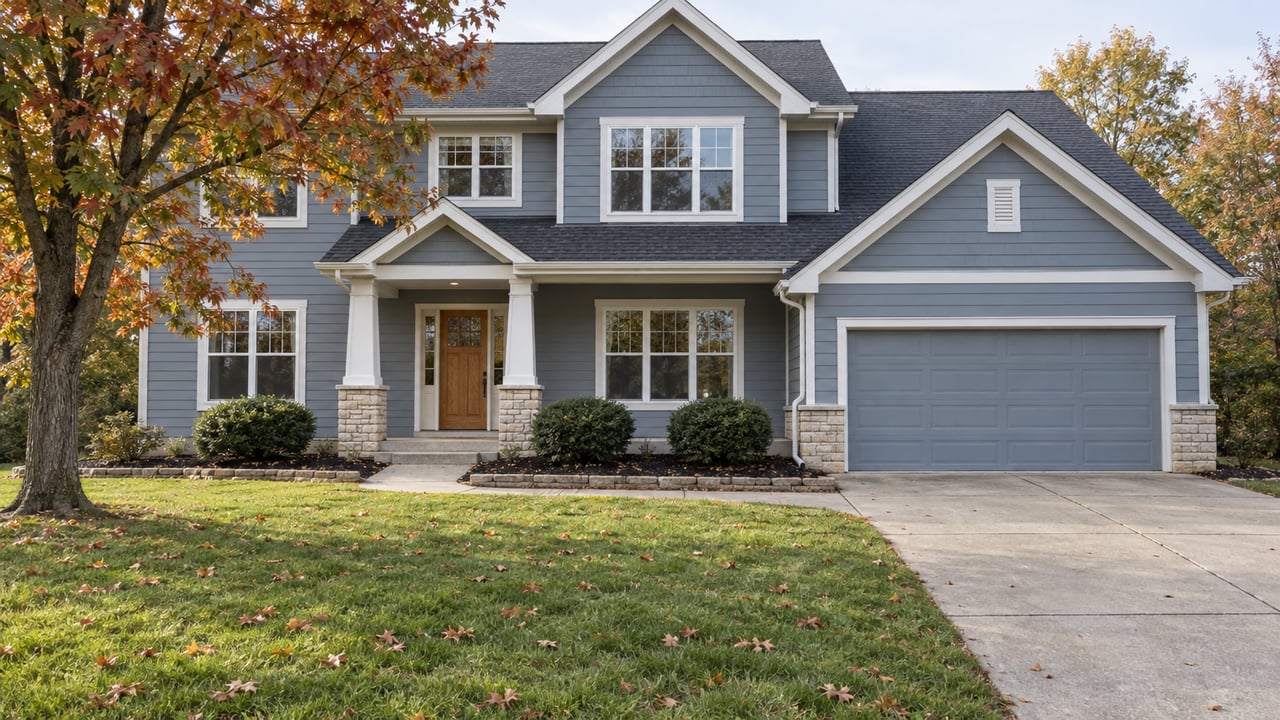
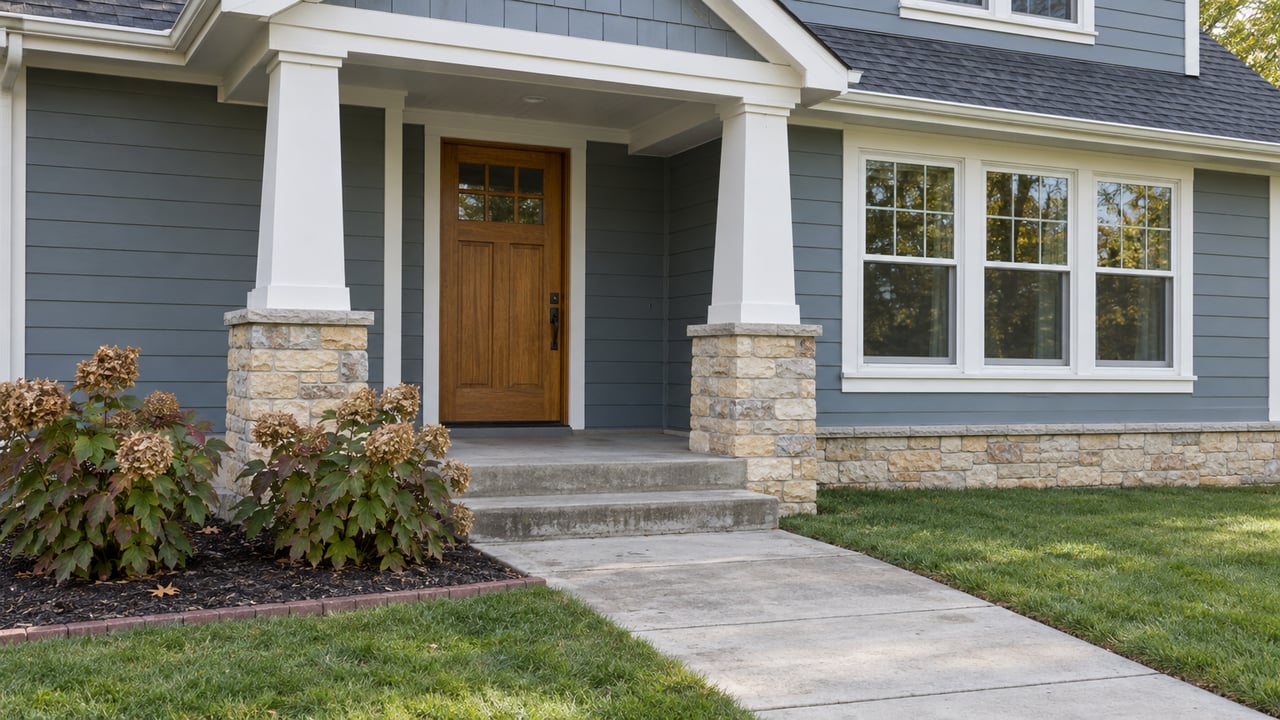
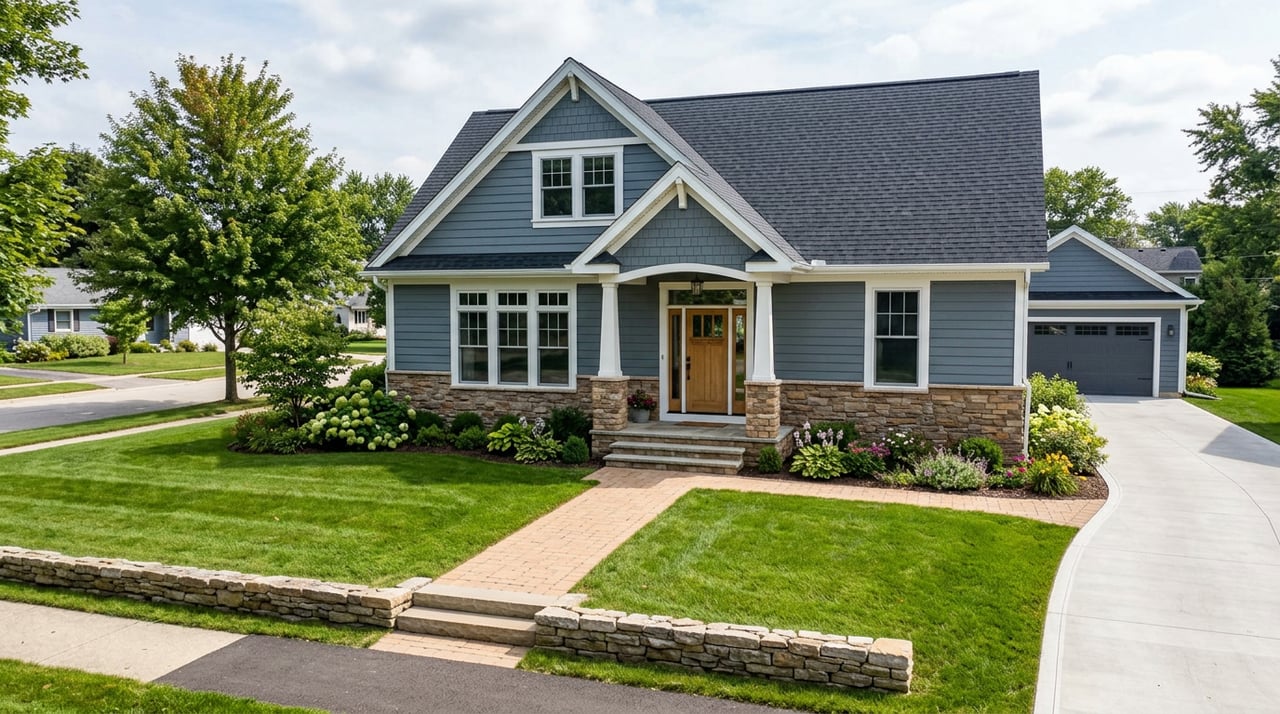
A buildable lot in Blumberg Estates has sold for as little as $35,000. That number alone makes the subdivision look like the obvious move for anyone who wants a custom home on Terre Haute's east side without paying east-side resale prices to get there. City water, city sewer, electric, and gas are already run to the lot line. The subdivision is covenant-protected, with rolling terrain and mature trees, and when a batch of these lots hit the market, listings marketed them as priced below their own appraised value, which is developer language for "we want you to build here."
None of that is wrong. It's also not the whole math. The land in Blumberg is cheap by national standards. Building on it is not, and the two facts don't cancel each other out the way most buyers assume they will.
What the Lot Price Actually Covers
When a Blumberg lot lists with water, sewer, electric, and gas already available, that's not a minor convenience. Getting utilities to a raw building site typically runs $9,000 to $34,500 or more, depending on how far the site sits from existing lines. Buyers looking at rural acreage elsewhere in Vigo County often have to add well and septic costs on top of that. Blumberg skips that step entirely, which is the real value baked into the lot price, not just the dirt itself.
Here's what a Blumberg lot purchase typically includes:
- City water and sewer hookups already stubbed to the lot
- Electric service ready to connect
- Natural gas available
- Recorded covenants that govern the subdivision's look and lot use
- A mix of lot types, including corner lots, cul-de-sac lots, and a small number of waterfront parcels
That combination is genuinely rare at this price point. The National Association of Home Builders' most recent cost survey data puts the average finished lot nationally at just over $91,000. A Blumberg lot that sold for $35,000 in 2021, even accounting for appreciation since then, is still priced well under that national benchmark, with utility work already done.
Where the Math Breaks
The problem isn't the land. It's what happens after you close on it.
National 2026 construction cost data, adjusted for the lumber and steel tariff pressure that's pushed material costs up over the past couple of years, puts standard or production-grade builds at roughly $175 to $320 per square foot, with fully custom builds running $300 to $600 or more per square foot. That's a meaningful jump from the baseline of around $162 per square foot that the NAHB's 2024 survey used as its reference point. Tariff actions on Canadian softwood lumber, which supplies a large share of U.S. framing material, pushed the effective tariff rate to 35.2 percent in 2025 and added an estimated $10,900 to the average home's cost according to an April 2025 industry survey, and that pressure hasn't reversed heading into this year.
Compare that build cost to what the surrounding market will actually support. Third-party trackers put Terre Haute's citywide median sale price somewhere between $149,000 and $160,000 as of mid-2026, and price-per-square-foot estimates for the city land anywhere from the high $80s to around $130, depending on which data source you check. That spread itself tells you something: Terre Haute doesn't have enough recent sales volume to produce a tight, stable per-square-foot number, which means appraisers working a new construction file here are pulling from a thin comp pool.
| Per Square Foot (except lot-price comparison) | |
|---|---|
| Blumberg lot cost (land only) | Well under national average of $91,146 |
| Standard/production 2026 build cost | $175 to $320 |
| Custom 2026 build cost | $300 to $600+ |
| Terre Haute citywide resale comps | $89 to $130 |
Run a simple example. An 1,800-square-foot custom build at a mid-range $220 per square foot costs about $396,000 in hard construction alone, before land, permits, or contingency. Comp that finished home against neighboring resales priced at $130 per square foot, and an appraiser may land closer to $234,000. That's a six-figure gap between what you spent and what the bank's appraisal supports at completion, and it's the buyer, not the builder, who absorbs that difference on a construction loan.
The Appraisal Is the Real Risk, Not the Framing Bid
Most people planning a build worry about the builder's quote changing mid-project. That happens, but it's not the risk that catches Blumberg buyers off guard. The bigger exposure sits with the appraisal that has to support the construction loan once the home is finished.
Construction loans convert to permanent financing based on the completed home's appraised value, not its cost to build. In a market where resale comps run well below national new-construction pricing, that final appraisal can come in short, forcing the buyer to bring extra cash to closing or restructure the loan. This isn't unique to Blumberg. It's the standard risk in any lower-cost resale market where someone chooses to build new. What makes Blumberg worth flagging specifically is that the lot pricing is so favorable that it can mask the build-cost side of the equation until a lender's appraisal forces the issue.
Construction loan rates typically run one to two percentage points above a standard 30-year mortgage, adding somewhere between $10,000 and $30,000 in carrying costs over a 12-month build. Custom builds average 12 to 18 months from permit to move-in, which means that carrying-cost clock runs longer than most buyers expect when they're still picking out a floor plan.
What This Means If You're Weighing a Build in Blumberg
None of this means building in Blumberg Estates is a bad move. It means the decision needs a different set of questions than the ones most build-vs-buy checklists ask.
Before signing a construction contract, get a pre-build estimate of completed value from a local appraiser, not just a builder's cost quote. Ask your lender directly how they handle a gap between appraised value and construction cost, since some construction-to-permanent loan programs have more flexibility here than others. And budget contingency beyond the standard 10 to 15 percent, since tariff-driven material costs have been trending upward through 2026, not stabilizing.
The buyers who do best in Blumberg tend to be the ones building for the long term, where the appraisal gap at completion matters less because they're not planning to sell in year two or three. Buyers planning a shorter hold should run the appraisal math before they run the floor plan.
A Few Common Questions
Is a lower appraisal at completion a Blumberg-specific problem? No. It's a risk anywhere resale comps sit well below current construction costs. Blumberg gets flagged here because its unusually low land price can make buyers overlook the build-cost side of the equation until the appraisal forces the conversation.
Does the utility work already being in place actually save meaningful money? Yes. Utility extension alone can run well into five figures on a raw lot. A Blumberg lot with water, sewer, electric, and gas already available removes a cost category that catches a lot of rural land buyers off guard elsewhere in the county.
Should I build or buy resale on the east side right now? That depends on your timeline, your down payment cushion for a possible appraisal shortfall, and whether you're building to live in long-term or planning a shorter hold. It's a conversation worth having with someone who knows both the lot inventory and the resale comps in the same subdivision.
If you're comparing a Blumberg build against buying an existing east-side home, or you already own a house you'd need to sell first, start with a clear picture of where you stand today. Andrew Southard, a full-time Terre Haute broker with Berkshire Hathaway HomeServices Newlin-Miller REALTORS who closed 52 transactions in 2025, can walk you through the lot inventory, the build-cost math, and what your current home would actually appraise for before you commit to either path. Get your free instant home valuation to see where your equity stands, or reach out directly to talk through the numbers on a specific Blumberg lot.
This article is general information, not legal, tax or financial advice. Consult a qualified professional about your situation.