Ask a Terre Haute contractor what a new house costs, and the honest ones won't quote you a number. Arron Smith, who runs Patriot Property Pros and builds across Terre Haute, Clinton and Rockville, put it plainly in his 2026 guide to local construction costs: the real answer depends on "what the build will cost on your lot, your layout, your finishes, and your site conditions." Not the square footage. The lot.
That distinction matters more in Deming Estates than almost anywhere else on Terre Haute's east side, because Deming Estates doesn't sell you a flat pad next to a subdivision entrance. It sells you a hill.
A Subdivision Built On Its Terrain, Not Despite It
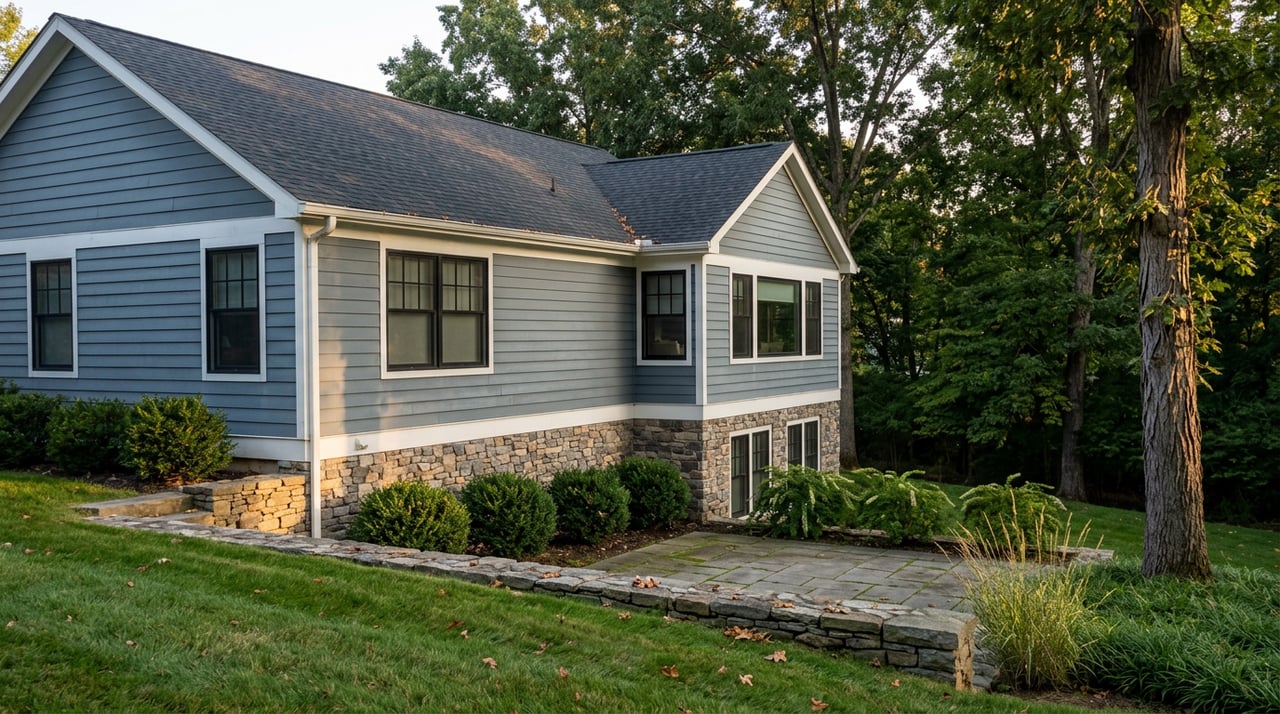
Deming Estates sits on wooded, undulating ground near Deming Park, and the homes reflect it. These are large, semi-secluded lots where the terrain rolls instead of running flat, and where most of the housing stock was custom-designed and built rather than pulled from a builder's standard plan book. That's the appeal. A lot with mature trees and elevation change reads as private and established in a way a graded, treeless subdivision lot never quite manages.
It also means the ground itself is doing more work in the price than a buyer comparing median prices on a portal would ever guess. A wooded, sloped lot and a flat, cleared lot can list for the same number and still cost two very different amounts to build on, renovate, or add to. The difference doesn't show up in a listing photo. It shows up on the first contractor's bid.
The Cost Line That Doesn't Show Up In The Listing Photo
Site preparation is one of the widest categories in any Indiana construction budget, and terrain is the reason why. Clearing and grading a wooded lot typically runs $3,000 to $10,000 more than clearing open land, and that's before excavation costs climb further on ground with real slope, since a hillside site needs more dirt work to level and grade before a foundation ever goes in.
Statewide guides for 2026 put total site preparation in Indiana anywhere from $40,000 to $80,000 once you account for clearing, grading, and utility connections together, and that range exists precisely because two lots that look similar on paper can behave completely differently once equipment shows up. A flat, already-serviced lot sits at the low end. A wooded lot with elevation change sits at the high end, and a lot like the ones in Deming Estates, chosen specifically for the trees and the roll of the land, tends to land there.
Here's roughly how that plays out side by side:
| Site condition | Typical added cost |
|---|---|
| Clearing a wooded lot | $3,000 to $10,000 |
| Excavation on sloped or uneven ground | Higher end of $1,500 to $10,000, often more with rock or heavy dirt work |
| Foundation choice affected by grade | Can shift a foundation budget from the $12,000 low end toward $70,000+ |
| Well and septic install, where applicable | $11,000 to $30,000 |
None of this shows up in a comparable-sales sheet. It shows up in the first round of bids, which is exactly the point at which a buyer who fell in love with the trees discovers what the trees are costing them.
When The Lot Still Runs On A Septic Tank
There's a second layer to this that's specific to older, established subdivisions like Deming Estates, and it's worth asking about directly rather than assuming. Custom-built neighborhoods on large lots near parks were sometimes platted before a municipal sewer line reached that stretch of the east side, which means some homes on these lots may still run on a private septic system rather than city sewer.
If that's the case for a home you're considering, Vigo County's own process is worth understanding before you write an offer. The Vigo County Health Department charges a $150 fee for a septic permit, and the county's Area Planning Department is allowed five business days to act on a permit application, though additional time can be required from the Health Department or Building Inspection division depending on what the site needs. Indiana's statewide rule for these systems also sets specific distances that matter on a wooded, uneven lot: a septic system generally needs at least 50 feet of separation from a private well, at least 10 feet from a building's foundation, and at least 5 feet from a property line. Tank size is tied to bedroom count, starting around 1,000 gallons for a one to three bedroom home and scaling up from there.
That last detail catches people off guard more than any other. Adding a bedroom to an older custom home, which is a common move for a buyer trying to make a mid-century layout work for a modern family, can trigger a requirement to upsize the existing septic tank. It's a conversation worth having with the county health department before you finalize plans for that addition, not after.
Before you write an offer on a wooded custom lot in Deming Estates, it's worth asking:
- Whether the home is on city sewer or a private septic system, and if septic, when it was last inspected
- What bedroom count the septic tank is rated for, if one exists, especially if you're planning any addition
- What the original grading and drainage plan looked like, since slope affects how water moves around a foundation over time
- Whether a local contractor has looked at the lot's grade before you assume any renovation is a standard undertaking
The Same Price, Two Different Bills
This is the part that a median price can't tell a buyer. Two homes in Terre Haute's east-side custom-lot subdivisions can list for nearly identical numbers and still carry very different total costs once site conditions enter the picture. A flat, utility-ready lot in one subdivision and a wooded, rolling lot in Deming Estates might sit a few thousand dollars apart on the listing sheet and tens of thousands apart by the time site prep, foundation work, and any septic questions are settled.
None of that makes Deming Estates a worse choice. Plenty of buyers want exactly what the terrain provides, privacy, mature trees, a lot that feels separated from the next house rather than lined up beside it. But it does mean the sticker price is only the start of the conversation, and the buyers who ask about site conditions before they fall for the view are the ones who don't get an unpleasant surprise from the excavator.
A Few Common Questions
Does every home in Deming Estates run on a septic system? Not necessarily. Some homes connect to city sewer and some, particularly older custom builds on the larger, more secluded lots, may still run on a private system. The seller's disclosure and a call to the Vigo County Health Department will confirm which applies to a specific address.
How much does a septic permit cost in Vigo County? The Vigo County Health Department lists a flat $150 fee for a septic permit. That covers the permit itself, not the installation or any soil evaluation work a licensed installer or soil scientist would separately charge for.
Can I tell how much site work a lot will need just by looking at it? Not reliably. Slope and tree cover are visible, but soil conditions, drainage patterns, and what's actually beneath the surface usually require a contractor's on-site read before anyone can put a real number on it. That's exactly why it's worth getting that estimate before you're locked into a contract, not after.
If you're weighing a custom lot in Deming Estates against something flatter and more move-in ready, it helps to have someone who knows which questions actually change the number. Andrew Southard has spent his career in Terre Haute's east-side neighborhoods and can walk you through what a specific lot is likely to cost before you ever get an excavator's quote. Reach out for a free instant home valuation and a straight answer about what you're really buying.