Most Phoenix Hills residents cross Fruitridge Avenue a dozen times a week without registering what sits on the other side. Deming Park reads on a map as green space. On the ground it is a 177-acre civic design that has been shaping this side of Terre Haute since 1919, and the households closest to it tend to use maybe a fifth of what's there.
The thesis of this guide is simple. The park at your back door was drawn by a nationally known landscape architect and finished by Depression-era stone masons, and the way to actually live near it has less to do with the playground everyone knows and more to do with the seasonal calendar most neighbors never learn.
The Design You Live Next To
Deming Park is the work of George Kessler, the landscape architect behind park and boulevard systems in Kansas City, Indianapolis, and Memphis. According to the Indiana Division of Historic Preservation and Archaeology, Kessler drew the park and neighboring Ohio Boulevard as one piece of a larger city plan that never got built out. Deming was the only part that got finished.
That matters because the park's curvilinear paths, its natural plantings, and the way Ohio Boulevard opens onto it from the west are all deliberate. When you turn onto Ohio and the road bends into the park, that is a 1919 design decision, not a coincidence of terrain. The 155 original acres were laid out in response to the crowded, narrow streets of the era, with open space treated as public health infrastructure.
The stone work you pass without thinking about, the low fieldstone fencing at the east and west entrances, the fish ponds, the stone bridge, the small fieldstone lighthouse, was built by Works Progress Administration crews in the 1930s using local materials. Once you know to look for it, half your walks change.
What's Actually On The Property
The Terre Haute Parks Department lists the following features on the current 177-acre footprint:
- Oakley Playground, the two-level play structure most families default to
- Clark-Landsbaum Holly Arboretum, a curated holly collection with year-round interest
- Spirit of Terre Haute miniature train, a summer-and-holidays ride that traces back to a 1950s original
- Deming Park Pool, open in summer
- 18-hole disc golf course
- Torner Center, the recreation building between the playground and the train station
- Two lakes, several sport courts, and a network of paved paths suitable for strollers and road bikes
The park sits at Fruitridge Avenue and Ohio Boulevard, which puts most of Phoenix Hills within a short walk or a two-minute drive of any of it. That proximity is the point. Households in denser city neighborhoods pay for this access in commute time. You pay for it in the price of a house on Phoenix Drive.
The Torner Center Is The Piece Nobody Talks About
If you ask ten Phoenix Hills neighbors what the Torner Center does, at least seven will guess wrong. It sits at the middle of the park, and the city runs its Recreation Department out of it. That translates into a rotating slate of classes, day camps, youth leagues, and community events staged from inside the park rather than across town. For families with school-age kids, this is the difference between hauling to programs and walking to them.
The building also serves as the reservation point for a lot of what people assume is walk-up only. Shelter rentals, pool rentals, the miniature train itself, hay wagon rides, and sport facility bookings all route through the Parks Department. If you want the train for a birthday party, the Fort Harrison shelter for a graduation, or a pavilion for a family reunion, the Parks Department reservation portal and the Main Park Office at 812-232-2727 are the actual channels. Picnic tables rent for $10 apiece with proof of liability insurance.
That is a strange detail to know in isolation. It becomes useful the first time a family birthday needs somewhere to happen and the weather forecast keeps changing.
The Seasons That Make Living Here Pay Off
Deming Park is one of those civic amenities that rewards residents differently in each quarter. The generic tourist writeups treat it as a summer destination. The people who actually live around it use it hardest between October and February.
Spring. The Clark-Landsbaum Holly Arboretum is planted for winter color, but the flowering understory around the ponds hits in April. Ducks and geese on the two lakes make the loop a defensible walk for anyone trying to talk a five-year-old into a half mile. The paved paths dry out earlier than the trail systems at Fowler Park or Dobbs, which matters when the rest of Vigo County is still muddy.
Summer. The pool is open, the train is running, and the disc golf course sees enough traffic that morning play is easier than afternoon. Reviewers consistently note that the pool runs small for the demand, which is worth planning around if you have a household that swims often. Weekday mornings before eleven are the reliable window. The concession stand covers basics.
Fall. The rolling terrain and the mature canopy make Deming the best fall-color loop on the east side, and the disc golf course thins out once school starts. This is the sweet spot for anyone using the park for daily walking or running. Local reviewers repeatedly point to the hill work as the reason serious runners choose Deming over flatter parks.
Winter. Two things happen here that don't happen anywhere else in town. The entrance slopes at the west side are used for sledding whenever there is enough snow, which locally means a handful of good weekends most winters. And the holiday light display along the interior loop becomes a slow-drive tradition, with families cruising through with the windows down and the radio on. This is the Deming Park experience that carries the most sentimental weight for long-term residents, and it is the one newcomers to Phoenix Hills learn about last.
The miniature train also runs a limited winter schedule tied to the holiday display, which is the least-advertised piece of the whole calendar.
Two Minutes Further East
Phoenix Hills sits close enough to Rose-Hulman Institute of Technology that the Oakley Observatory, which Rose-Hulman operates and periodically opens for public viewing nights, is a short drive further east on Wabash Avenue. That is not a Deming Park amenity, but it is a Phoenix Hills-adjacent one. Between the park's arboretum on the west and the observatory on the east, this stretch of the east side has more programmed outdoor learning than most residents use in a year.
What This Says About The Address
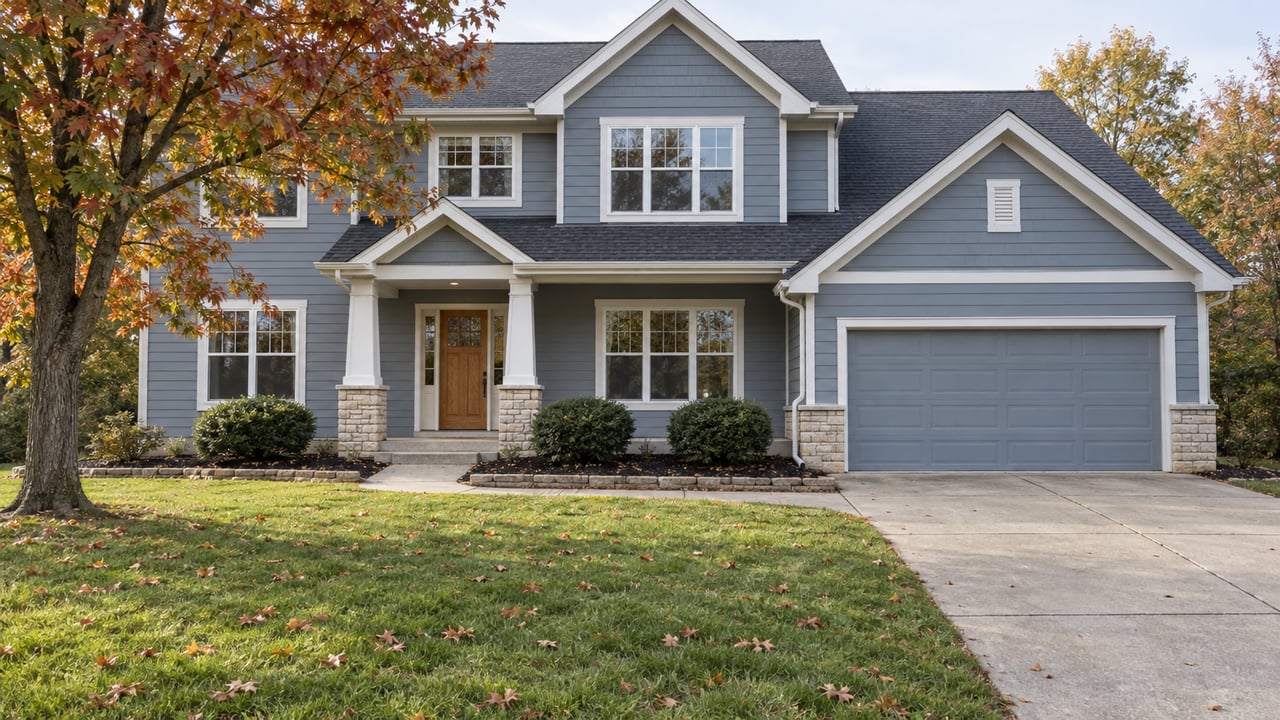
Homes in Phoenix Hills, most of them built in the mid-1980s on the site of the old Terre Haute Country Club grounds, were sited to take advantage of the rolling terrain that carried over from the golf course. The neighborhood's proximity to Deming was baked into the plan from the beginning. It is one of the reasons the housing stock skews toward larger four-bedroom homes on generous lots. Buyers who came here in the 1980s were paying, in part, for the park.
The current resident version of that trade is quieter. You get a walkable civic amenity that a landscape architect of national reputation designed a century ago, staffed programming inside it, and a seasonal calendar that runs year-round. Most of your neighbors are using a fraction of it. That is the actual value of the address, and it does not show up on a listing sheet.
If you are thinking about the value of your Phoenix Hills home, either because a life change is coming or because you want to plan around the next few years, Andrew Southard can walk you through what east-side proximity to Deming Park is worth in the current market. Start with a free instant home valuation on the site, then set a conversation for the specifics of your street.